

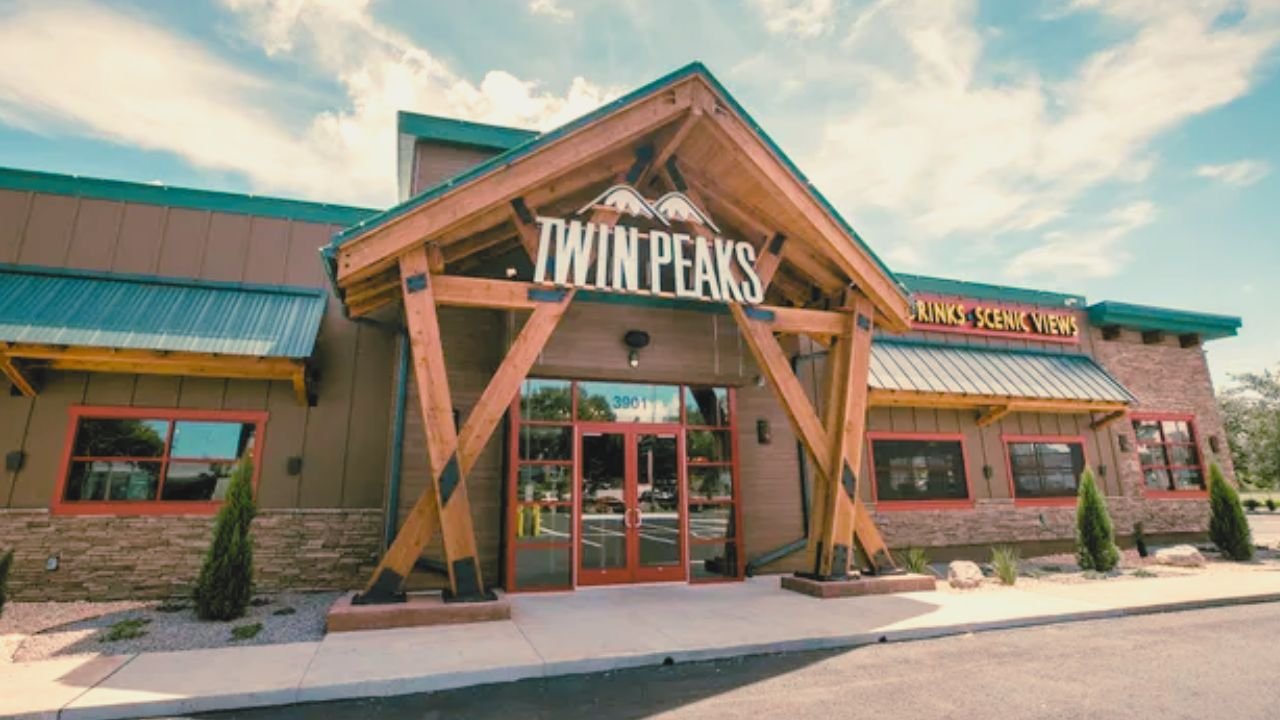
A bankruptcy headline is easy to misread. When Twin Hospitality Group filed for Chapter 11 in late January 2026, a lot of Twin Peaks regulars and employees understandably assumed the worst. But the situation is more specific than the word “bankruptcy” suggests — and it’s worth understanding what’s actually happening before drawing conclusions.
This article covers what the Chapter 11 filing actually means, whether Twin Peaks locations are closing, why the parent company reached this point, and what customers, employees, and franchisees should realistically expect going forward.
Twin Peaks Is Not Closing — But Its Parent Company Filed for Bankruptcy
To answer the most common question directly: Twin Peaks restaurants are not shutting down as a result of this filing.
Twin Hospitality Group, the parent company of Twin Peaks, filed for Chapter 11 bankruptcy on January 26, 2026, in the U.S. Bankruptcy Court for the Southern District of Texas. The chain’s roughly 114 to 115 locations across 27 U.S. states and Mexico are expected to remain open and operate normally while the bankruptcy case proceeds.
The company has also stated that staff will continue to be paid throughout the process. This is a corporate-level filing — not a shutdown order for individual restaurants. The doors stay open while the company works through its financial obligations under court supervision.
Chapter 11 vs. Going Out of Business — What the Difference Is
This distinction matters, and it’s why so many people are searching the question in the first place.
Chapter 11 is a reorganization bankruptcy. It allows a company to keep operating while it restructures debt, renegotiates contracts, and builds a recovery plan — all under the oversight of a bankruptcy court. The goal is to stabilize and continue, not to wind everything down.
Chapter 7 is a different process entirely. That’s the form of bankruptcy tied to liquidation — selling off assets, closing locations, and winding down operations. Twin Peaks’ parent filed Chapter 11, not Chapter 7.
A simple way to think about it: imagine a household that renegotiates its mortgage and credit card terms while still going to work and keeping the lights on. The bills are being restructured, not abandoned. “Going out of business” would be more like selling the house, the car, and everything else because there’s no path forward.
Plenty of well-known restaurant and retail chains have gone through Chapter 11 and come out the other side still operating. That doesn’t mean it’s a smooth or guaranteed process — but it’s not the same as a chain shutting its doors permanently.
Why Twin Hospitality Group Reached This Point
The filing didn’t come out of nowhere, and it’s worth understanding the business pressures behind it.
Twin Hospitality Group went public on NASDAQ roughly one year before the Chapter 11 filing — a notably short window between debut and financial distress. In that period, the company reported shrinking sales and a significant decline in its stock value. The CEO also stepped down before the filing. Shares have continued to trade on NASDAQ, but with a “Q” suffix added to the ticker, which signals to investors that a bankruptcy proceeding is active.
Debt load was another factor. The company’s broader portfolio included both Twin Peaks and the Smokey Bones brand, and the capital structure pressures tied to managing multiple concepts added to the strain.
The segment itself also faces structural headwinds. Sports bars and “breastaurant” concepts — chains that combine casual dining with a particular atmosphere and entertainment angle — are sensitive to shifts in discretionary spending. When consumers pull back, group outings and dining experiences are often among the first things cut. That kind of margin pressure, layered on top of debt obligations and a stumbling public offering, created a difficult position for the company to navigate.
Assets and liabilities for the parent organization have been reported in the $1 to $10 billion range, which gives some sense of the scale of what’s being restructured.
The Break From FAT Brands and What Comes Next
One of the more significant developments to come out of the bankruptcy process is a major shift in who owns and guides the Twin Peaks brand.
Following the Chapter 11 filing, Twin Peaks announced it will no longer be associated with FAT Brands, the restaurant portfolio company it had been part of. Instead, Summit Acquisitions, LLC — representing the chain’s bondholders — has stepped into a strategic advisory role for the brand.
Twin Peaks will operate going forward as a privately held company under the name Summit Twin Hospitality I, LLC. That’s a meaningful structural change: moving from a publicly traded portfolio company back to private ownership brings a different kind of accountability and a different strategic approach.
Private ownership can offer more operational flexibility — fewer obligations to public shareholders, more room to make long-term decisions. But it also introduces less transparency, at least from the outside. What this shift means for the day-to-day restaurant experience isn’t entirely clear yet. Corporate changes of this scale typically take time to filter down to individual locations.
What This Means for Customers, Employees, and Franchisees
For Customers
If you’re a regular at a Twin Peaks location, you shouldn’t expect the doors to close tomorrow based on current reporting. Multiple news outlets confirmed that operations are continuing as usual. Gift cards and reservations should still be honored, though it’s worth staying aware of any announcements specific to your local location.
That said, it’s reasonable to keep an eye on things. Chapter 11 cases can involve lease rejections or selective store closures as part of a restructuring plan. No widespread closures have been announced, but that doesn’t mean every single location will remain open indefinitely throughout the process.
For Employees
The company has stated that staff will be paid during the bankruptcy proceedings. In Chapter 11, companies typically seek court approval to continue wages and benefits as part of keeping operations running — and this is generally one of the first priorities granted. The goal is to prevent the workforce from walking out, which would make the reorganization significantly harder.
Longer term, some roles or locations could be affected by whatever restructuring plan the court eventually approves. But there has been no blanket layoff announcement, and the current posture from the company is one of continuity.
For Franchisees and Investors
This is where things get more complicated. Parent-level debt restructuring, a change in ownership structure, and a break from an established portfolio company can all affect how franchisees receive support, how development plans take shape, and how brand equity holds up over time.
If you’re a current franchisee or someone considering a franchise investment, the practical advice is to watch court filings closely and pay attention to what Summit Twin Hospitality I, LLC communicates about its plans. Resources like Everyday Business Plan can also help you think through the financial and planning considerations involved in evaluating a franchise during a period of corporate uncertainty.
The Bigger Picture: What Happens Next
Chapter 11 can lead to a few different outcomes. In the best case, the company restructures its debt successfully, stabilizes under new private ownership, and continues operating with a cleaner balance sheet. In a more difficult scenario, selective store closures or asset sales could happen as part of the court-approved plan. In the worst case — though there’s no current indication of this — a Chapter 11 case can convert to Chapter 7 liquidation if reorganization doesn’t work.
Right now, the messaging from Twin Peaks and the reporting from multiple outlets points to continuity. Operations are ongoing. Staff are being paid. The brand is transitioning to a new corporate structure that its advisors presumably believe gives it a better shot at stability.
But it’s also fair to say that entering Chapter 11 is not a sign of strength. The company has real financial challenges, and the outcome of the restructuring process will take time to become clear. Anyone with a stake in Twin Peaks — whether as a customer, employee, or investor — should stay informed rather than assume everything will resolve itself automatically.
Bottom Line
Twin Peaks is not going out of business in the immediate sense. Its parent company filed for Chapter 11 bankruptcy reorganization — a legal process designed to help struggling businesses restructure, not necessarily shut down. Locations are open, staff are being paid, and the brand is in the process of transitioning to private ownership under a new corporate name.
What the long-term outcome looks like depends on how the reorganization unfolds over the coming months. For now, the chain is still operating — but it’s navigating one of the more significant financial challenges in its history, and the road ahead carries genuine uncertainty.
Also Read: