

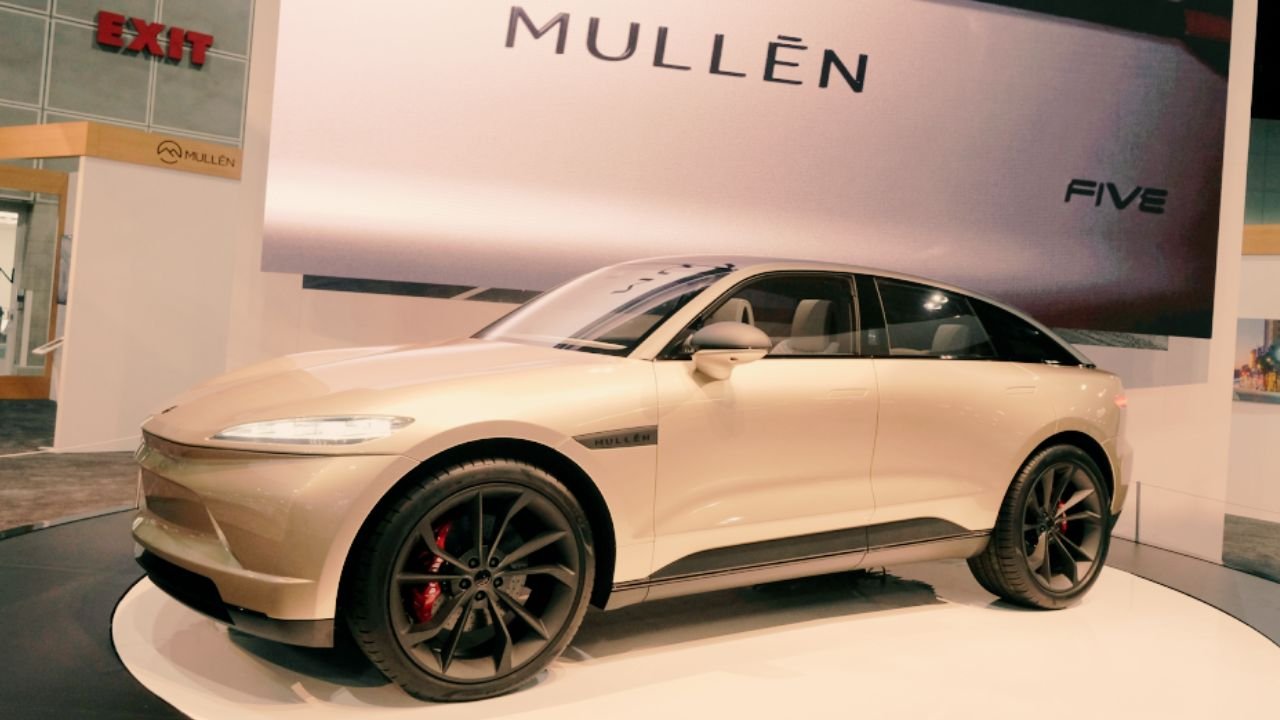
Mullen Automotive has been rebranded, delisted from Nasdaq, placed into receivership, and is sitting on a $2.6 billion accumulated deficit. Yet as of mid-2025, its doors in Brea, California are technically still open.
So what’s actually happening? Is this company done, or just in serious trouble?
This article gives you a straight, factual breakdown — no hype in either direction. We’ll cover the rebrand, what receivership means in plain terms, the current financial numbers, and what this means for investors, customers, and anyone watching the EV startup space.
What Mullen Automotive Is Now
If you’ve been searching “Mullen Automotive” and getting confused by different names, here’s the quick version: the company no longer operates under that name.
In 2025, Mullen merged with its subsidiary Bollinger Motors and rebranded as Bollinger Innovations, Inc., trading under the ticker BINI. The company is still headquartered in Brea, California, but the Mullen Automotive brand is essentially gone.
The product lineup shifted as well. The original Mullen Five passenger SUV was cancelled. The focus moved to commercial electric vehicles — the Mullen One cargo van, the Mullen Three light truck, and Bollinger-branded medium-duty trucks. The company also has ties to rebadging and importing Chinese EVs under Mullen-branded lines.
So if you’re an investor or customer who knew Mullen Automotive, you’re now dealing with a restructured, renamed company that looks quite different from what it was two years ago.
Delisted, Rebranded, and in Receivership — What Actually Happened
The collapse didn’t happen overnight. It came in stages, and each stage made the next one harder to survive.
October 2024: The First Major Alarm
In October 2024, Mullen announced a 20% workforce reduction — roughly 70 employees — and cancelled the Mullen Five passenger SUV program entirely. The company also consolidated facilities to cut monthly spending by approximately $5.5 million.
This was a clear signal that the original vision wasn’t working. Passenger EVs were out. Commercial vehicles were the new focus. And costs needed to come down fast.
2025: Rebrand and Delisting
Earlier in 2025, the company merged with Bollinger Motors and rebranded to Bollinger Innovations. This was framed as a consolidation strategy, not a turnaround.
Then in October 2025, the company was delisted from Nasdaq after failing to maintain the minimum bid price requirement. Shares moved to OTC (over-the-counter) markets, where trading is far less regulated and far less liquid.
Shortly after delisting, the company was placed into receivership.
What Receivership Actually Means
Receivership isn’t the same as bankruptcy, but it’s serious. A court appoints a receiver — an outside party — to take control of the company’s assets. The receiver’s job is to protect creditors, not to grow the business.
Think of it like a large real estate project that can’t pay its lenders. A court steps in, appoints someone to take control of the property, collects whatever income it can, and potentially sells assets to repay what’s owed. The focus shifts entirely from growth to creditor recovery.
That’s the mode Bollinger Innovations is in right now. It’s not a Chapter 11 reorganization, and it’s not a Chapter 7 liquidation — at least not as of the most recent available reporting. But it’s not normal business operations either.
Is the Company Still Operating?
This is the core question, so here’s the direct answer: not fully shut down, but barely functioning.
As of mid-2025 reporting, Bollinger Innovations still held an active business license in Brea, confirmed by city officials. CEO David Michery and the executive team remained based there. Manufacturing operations were described as continuing, though in a reduced, refocused state.
The honest way to describe it: the company is still alive, but it’s on life support. Not dead, but not stable. A full shutdown or liquidation remains a realistic risk if operations can’t improve or if a buyer doesn’t emerge.
Here’s how the three legal situations differ, in plain terms:
- Receivership: Court-appointed control to manage assets and protect creditors. The company may still operate, but decisions are no longer fully in management’s hands.
- Chapter 11 bankruptcy: Court-supervised reorganization. The company keeps operating while it restructures debts.
- Chapter 7 bankruptcy: Full liquidation. Operations stop. Assets are sold to pay creditors.
Bollinger Innovations has entered receivership. As of the latest available information, it has not been confirmed as entering formal Chapter 11 or Chapter 7 proceedings.
The Financial Numbers Behind the Collapse
The numbers here are stark. There’s no way to soften them without being misleading.
For the quarter ended June 30, 2025, Bollinger Innovations reported revenue of approximately $474,000. In the same quarter, the company posted a net loss of approximately $131.8 million.
The accumulated deficit — the total losses piled up over the company’s history — stood at roughly $2.6 billion as of June 30, 2025.
To put that in perspective: the company brought in under half a million dollars in a quarter while losing over $130 million in that same period. That’s not a business in decline. That’s a business where the financial engine has essentially stopped.
Earlier SEC filings and analyst commentary noted more than $500 million in cumulative net losses since the company went public in 2021. Management itself warned in prior filings that there was “no assurance” of raising the capital needed to continue operations.
What Happened to the Stock
Mullen’s stock (MULN) was once a popular retail trading play in the microcap EV space. It went through multiple reverse splits and heavy dilution over the years.
After being delisted from Nasdaq in October 2025, shares moved to OTC markets and were trading at under $0.0005 per share. That’s not a typo — less than one-tenth of a cent. For anyone holding shares, the practical reality is that the investment has lost almost all of its value, and the low OTC trading volume makes it very difficult to exit even small positions.
What This Means for Investors and Customers
If You’re an Investor
The stock situation is about as bad as it gets without a formal zero. Shares trading at sub-penny levels on OTC markets, with minimal liquidity, signal that the market has effectively priced in near-total loss.
There is always a theoretical scenario where a company in receivership gets acquired, assets get reorganized, and some value is recovered. But that would require a willing buyer and favorable terms — neither of which is guaranteed. Anyone considering speculative OTC trades in MULN or BINI should treat that as an extremely high-risk bet, not an investment.
If You’re a Fleet Buyer or Customer
This is where the situation gets practically important. Some commercial operations have purchased or considered Mullen One vans or other vehicles from this lineup.
The immediate risk: if the company fully shuts down, parts availability, warranty support, and service could become very difficult or impossible. Resale values would likely be poor given the brand uncertainty.
For a fleet manager, this isn’t just a financial question — it’s an operational one. If a vehicle goes down and no parts are available, that directly affects your business. The current product offerings may look competitive on price or specs, but the support risk is significant and should be weighed against more established alternatives.
How Did It Get Here?
Mullen followed a pattern that’s become familiar in the EV startup world: aggressive early ambitions, acquisitions that added costs, heavy dilution to fund operations, and then a painful retreat when the capital ran dry.
At one point, Mullen was a leading bidder for the assets of bankrupt Electric Last Mile Solutions (ELMS), including a former Hummer plant in Indiana. That acquisition came with significant capital requirements that added pressure to an already strained balance sheet.
Companies like Lordstown Motors and ELMS itself followed similar paths — strong early press, retail investor enthusiasm, and then collapse when production costs, competition, and funding realities caught up with them.
If you’re evaluating any early-stage EV company, Mullen’s story is a useful case study in what happens when growth outpaces capital and a clear path to profitability. Resources like Everyday Business Plan can help you build the kind of financial discipline these companies lacked from the start.
The Bottom Line
Is Mullen Automotive going out of business? The most accurate answer right now is: not yet, but it’s in extremely serious trouble.
The company has been rebranded, delisted, placed into receivership, and is generating almost no revenue against catastrophic losses. The stock is effectively worthless at current prices. The core management team remains in Brea and operations continue in some form, but under court-appointed oversight focused on creditor recovery — not building a business.
A full shutdown is a realistic outcome. So is a distressed sale or asset liquidation. A genuine turnaround would require a
Also Read: