

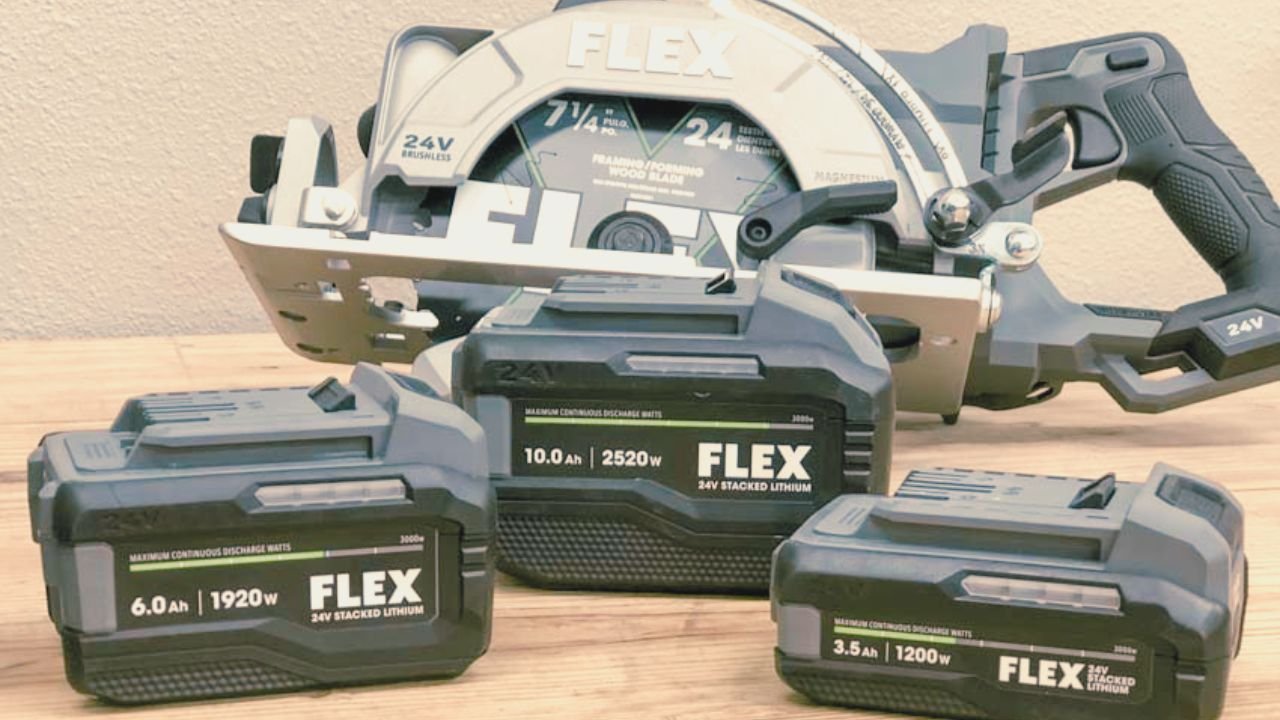
If you’ve walked through the power tool aisle at Lowe’s lately and noticed Flex tools are gone, you’re not alone. And if you’ve been wondering whether the brand is shutting down, that’s a fair question to ask. Empty shelves have a way of sending a message — even when the message isn’t quite right.
This article breaks down what’s actually going on. We’ll cover what changed at Lowe’s, whether Flex is truly going out of business, why the split likely happened, and where you can still buy Flex tools today. If you own Flex tools or are thinking about buying them, this should give you a clearer picture.
Flex Tools at Lowe’s — What Changed and When
Flex launched in the U.S. around 2021 as a pro-focused cordless platform built around a 24V system. From the start, Lowe’s was the main home for the brand — heavy in-store presence, bundled deals, dedicated aisle space. It looked like a serious push into the professional tool market.
Fast forward to early 2026, and the picture looks very different. By that point, Lowe’s had removed the majority of Flex cordless tools and accessories from both its shelves and its website. ToolGuyd, a well-regarded tool news site, confirmed that Lowe’s had purged most of its Flex cordless listings — leaving only a handful of Flex Stack Pack tool boxes still showing up online.
The removal happened in waves. Early reports suggested Flex was moving to online-only at Lowe’s, with tools being pulled from physical stores but remaining available on the website. But later updates showed that even the online listings had largely disappeared. The situation moved faster and more completely than many people expected.
It’s worth noting that the picture hasn’t been perfectly consistent. Some creators noted the full Flex lineup briefly returned to Lowe’s website in 2026, while others reported it was gone from both channels entirely. The information has been fluid, which has added to the confusion.
No, Flex Is Not Going Out of Business — But the Rumor Makes Sense
Here’s the direct answer: there is no official announcement from Flex or its parent company Chervon saying they are shutting down. None. Multiple tool commentators have looked into this and explicitly called the “going out of business” claim a rumor with no confirmed backing.
One YouTube creator reached out to Flex directly for answers. The email went unanswered. But silence from a company is not the same as a shutdown notice — it could mean a lot of things, and it doesn’t confirm anything on its own.
The confusion is completely understandable, though. When a brand disappears from a major retailer seemingly overnight, it looks like something is very wrong. If you’re a contractor who bought a full Flex setup at Lowe’s and now walks in to find zero Flex products on the shelves, your mind goes to worst-case scenarios.
Think of it like a clothing brand being pulled from a department store. The store stops carrying it, the shelves go empty, and shoppers assume the brand died. But the brand might still be selling online, through specialty shops, or through other retailers. Empty shelves reflect a retail relationship ending — not necessarily a company closing.
That’s the more accurate framing here. ToolGuyd describes the situation as Lowe’s dropping Flex, not Flex ceasing operations. Those are two very different things.
Why Lowe’s Likely Dropped Flex in the First Place
Nobody from Lowe’s or Chervon has issued an official statement explaining the split, so everything here is based on what tool reviewers and industry watchers have said. Take it as informed commentary, not confirmed fact.
The most common explanation points to sales performance. Flex came in at a premium price point — great tools, but not cheap. Lowe’s serves a wide range of shoppers, many of whom are more familiar with brands like DeWalt and Craftsman than with a newer name like Flex. Getting a relatively unknown premium brand to move fast off shelves is tough work.
Lowe’s, like any large retailer, tracks how quickly products sell. Every inch of shelf space has to earn its keep. If a brand isn’t hitting the right velocity, that space gets reallocated to something that moves faster. Multiple YouTube creators covering the tool space have pointed to this kind of performance metric as the likely driver — not bad reviews, not safety issues, not product defects.
This kind of thing has happened before. Ego, the outdoor power equipment brand, was once sold at Lowe’s. That partnership ended. Ego didn’t disappear — it kept selling through other channels and continued growing. The Lowe’s split was a setback in that channel, not a death sentence for the brand.
Flex may be following a similar path. Whether that path leads somewhere sustainable is still an open question.
Where You Can Still Buy Flex Tools Right Now
If you’re looking for Flex 24V tools today, Lowe’s is no longer your best bet — but you do have options.
Two retailers that tool reviewers consistently mention are Acme Tools and Ohio Power Tool. Both are specialty, pro-focused retailers that carry a wide selection of the Flex 24V lineup, including batteries and accessories. If you’ve already invested in the Flex platform and need to add tools or replace something, these are good places to start.
Amazon also carries Flex tools, and availability there has continued even as Lowe’s pulled back. Searching for specific tools or battery packs on Amazon tends to surface current listings with reasonable availability.
The overall direction seems to be a shift away from mass big-box retail and toward online sales and pro-centric specialty dealers. That’s a harder path for brand visibility, but it’s not the same as shutting down. Plenty of professional-grade brands operate this way without any major retail partner.
What This Means If You Already Own Flex Tools
This is probably the most practical question for a lot of readers. If you’ve built up a collection of Flex 24V tools, you’re probably wondering whether you’ll be able to get batteries, accessories, and warranty support going forward.
Based on what’s currently known, Flex and Chervon have not announced any end to warranty coverage or service support. There’s no indication that warranties are void or that repairs are unavailable. If anything changes on that front officially, it would likely come with a direct announcement from the company.
Batteries and accessories are still available through the retailers mentioned above, so you’re not stranded right now. The bigger risk to think about is longer-term: if Flex continues to lose retail ground and struggles to grow its dealer network, there may come a point where parts or new tools become harder to find. That’s not happening today, but it’s worth keeping in mind when deciding whether to add more tools to the platform.
How to Tell If a Brand Is Actually in Trouble
Flex’s situation is a useful reminder that losing shelf space at a major retailer is a warning sign — but not a definitive one. Knowing what to actually watch for can help you make smarter decisions.
Signs that a brand might be in real trouble include things like: the company stops launching new products, warranty claims go unanswered, service centers close, and the brand disappears from all channels — not just one retailer. A company going dark across the board is very different from losing a single retail partner.
Right now, Flex hasn’t hit those markers. But if you’re keeping an eye on the situation, those are the things worth watching. Everyday Business Plan covers topics like this — how businesses navigate distribution challenges, retail relationships, and brand positioning — if you want to think through the bigger picture.
The Bottom Line on Flex Tools
Here’s where things stand as clearly as the current information allows: Flex is out at Lowe’s, and that’s a significant loss for the brand’s visibility and reach in the U.S. market. The relationship ended in waves, and by early 2026, most of the Flex 24V lineup had been removed from Lowe’s shelves and website.
But Flex is not confirmed to be going out of business. That claim is a rumor, and it doesn’t have official backing. The tools are still available through specialty retailers and online, and the parent company Chervon has not announced any closure or shutdown.
If you already own Flex tools, your warranties and support should still be intact — though it makes sense to stay aware of how the brand’s availability evolves. If you’re deciding whether to buy into the Flex platform now, you’re taking on more uncertainty than you would with a brand that has a strong multi-channel retail presence. That’s a real consideration, and only you can weigh whether the tools are worth it for your situation.
The story here isn’t really about a company dying. It’s about a brand that bet heavily on one retail relationship, lost that bet, and is now figuring out what comes next. Whether Flex finds its footing through other channels — or continues to shrink — is something we’ll likely know more about over the next year or two.
Also Read: